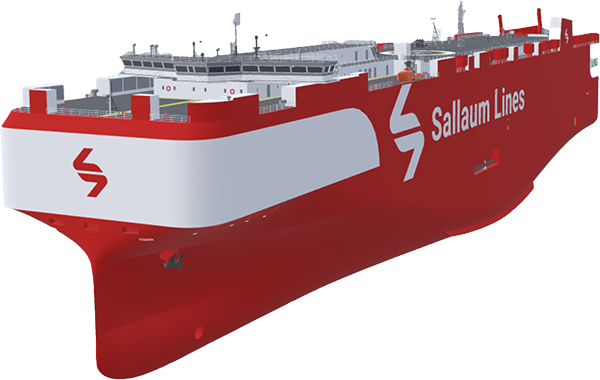
Loading… Ocean Class – 3D Experience The Ocean Class RoRo Vessels Drag and pinch zoom around on the screen or use the navigation on the right. For best result, open in a computer. Navigation Navigation Technology and Environment Safety Future enhancements Back Technology and Environment Engine Room The ME-GI Main Engine from Hyundai MAN B&W utilizes Natural gas injection at high pressures for combustion, ensuring complete methane burn-off and zero atmospheric escape, significantly helping to mitigate environmental impact. Auxiliary Machinery Equipped with Dual Fuel LNG powered Auxiliary Engines, this vessel champions eco-friendly operation, slashing carbon emissions by up to 15% in comparison to conventional marine fuels. Also, can Alternative Fuel Vehicles Hydrogen and Natural Gas Cars. Boiler Room Featuring Dual fuel LNG Fired auxiliary boilers, this vessel notably curtails carbon emissions by up to 15% even when stationary at berth or anchorage, contributing to cleaner port environments. LNG Tank Area The Type C LNG tank is engineered for resilience, capable of securely maintaining LNG for over 2 months, thereby surpassing the environmental safety of conventional tank designs. Main Propulsion System A Shaft generator is incorporated, allowing for the auxiliary engines to remain offline while cruising, cutting fuel use and associated carbon emissions significantly. AMP – Alternative Maritime Power When the onshore grid gets its power from renewable energy sources such as solar, wind, or water, the ship generates no emissions while in port. Because onboard engines can be shut off during the port stay, noise is also eliminated. AMP is also called cold ironing, Onshore Power Supply OPS, Shore Connection SC, or High Voltage Shore Connection HVSC. Use alternative maritime power (AMP) for your ship: take power from the shore grid instead of running the ship’s onboard engines. Bow Section The VFD controlled bow thruster minimizes power wastage during idle and active states, enabling up to 30% energy savings and a parallel reduction in carbon emissions during maneuvering. Safety Across Cargo Decks / Surveillance Areas AI cameras are strategically placed for advanced fire and smoke detection, greatly enhancing safety, particularly in areas storing EV and hydrogen-powered vehicles. Throughout Vessel In compliance with regulations, smoke- and heat-type fire detectors offer an additional layer of fire safety aboard the vessel. Future enhancements Hull Surface The application of silicone-based paints deters fouling, thus maintaining optimal vessel speed and minimizing power requirements between five-year docking intervals. Bridge/Navigational Deck Utilizing a weather routing service ensures punctual berth arrivals through the selection of ideal speeds and routes based on current weather patterns, fostering fuel efficiency and lowering carbon emissions. Engine Control Room / Data Centers Mass flow meters and shaft meters precisely gauge fuel consumption and shaft power, which is vital for EU ETS compliance and CII calculations. This system is supported by advanced vessel performance software, providing predictive analytics for CII ratings, propeller and hull maintenance, and engine and boiler performance optimization. + –